Say what you need.
Ask about your calendar or put a task into words. The device-first experience is designed to make useful help easier to reach.
Make your own plans. Keep the things that matter close. Stay connected with your people. Bob is being built to make everyday help as familiar as a conversation.
For older adults · In development
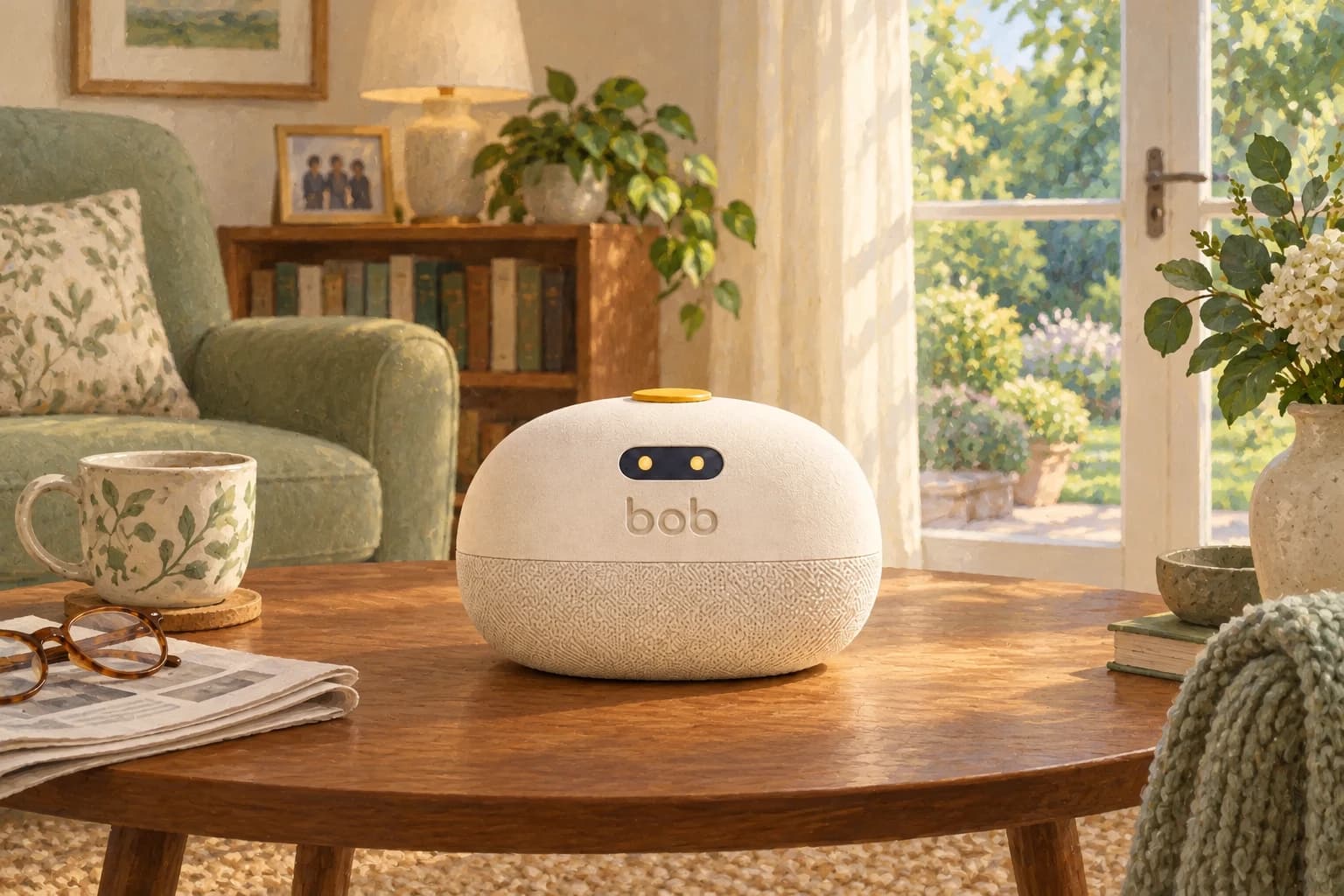 Device concept
You shouldn’t have to learn another app to ask about your day. A device at home gives Bob a familiar place to live, with a conversation you can continue in your own way.
“Bob, what’s on tomorrow?”
“Coffee with Sam at ten, and the garden plants to pick up at two.”
Ask about your calendar or put a task into words. The device-first experience is designed to make useful help easier to reach.
Personal memory can carry preferences into another conversation. You can review what’s remembered and ask Bob to forget what doesn’t help.
Make a plan with family in a shared conversation. Your private memories stay separate from the group’s replies.
You’re the person making the plans. Bob’s role is to make the next step easier, while keeping private conversations separate from shared family spaces.
The primary vision is a physical device you can talk to at home. Text is another way to reach Bob. Setup requirements and the final device controls will be explained before release.
Personal conversations and shared spaces are separate. The current foundation excludes personal memory from group replies. This page does not promise automatic monitoring or reports to family.
Bob is not a medical device or an emergency-response service. These examples show everyday plans, tasks and family coordination.
Bob is in development. The device shown is a concept, and pricing and a release date haven’t been announced. Join early access to hear what comes next.
Join early access for updates on Bob’s everyday-help experience.
In development · Release date and pricing to come
There’s more than one way to make room for Bob.